Multipurpose Commercial Premises (PSN): Meaning and Suitability for Your Business
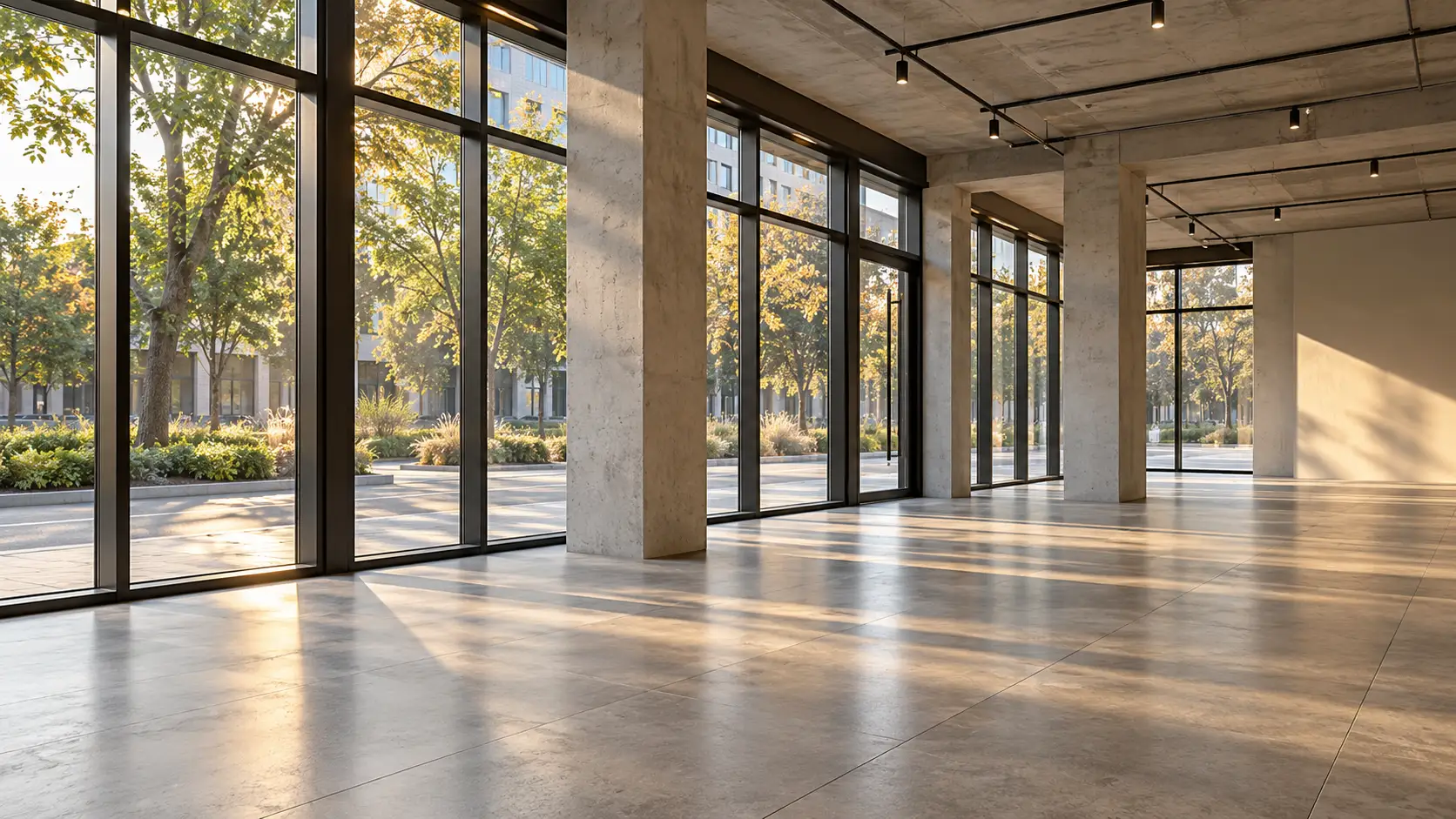
Multipurpose commercial premises, commonly advertised in Russia as PSN, are non-residential premises offered for several possible uses. “Multipurpose” does not mean permission to run any business. Suitability for an office, showroom, café or service business depends on the documents, building, services and requirements of the proposed activity.
The useful buyer’s question is not whether something could open here, but whether this particular property suits the intended project. The same room might accommodate a small team yet be unsuitable for food preparation or a steady stream of customers. This guide explains the Russian PSN label and how to compare offers without assuming capabilities that have not been established.
What does PSN mean in a Russian property listing?
In listings, PSN groups properties not marketed solely as a ready-made shop, specialised warehouse or fitted office. It might be a finished unit, former bank branch, space in a new building or premises that still need adaptation. The label alone tells you neither the condition nor how much work will be required.
Treat the description as an invitation to investigate several scenarios, not as an engineering assessment. If a seller lists “office, salon, café”, ask what supports each option. A water connection establishes one feature, not overall suitability for catering; a wide entrance does not automatically resolve delivery or accessibility requirements.
PSN, non-residential status and an open layout are different things
These expressions answer different questions. Non-residential status concerns the documented property. PSN describes how an offer is marketed. An open layout describes spatial arrangement; it does not remove structural elements, building-services zones or restrictions on alterations. An empty rectangular room is not automatically suitable for every business.
The condition at handover is another separate issue. Shell and core, white box and fitted space principally describe the works completed and what is provided. Multipurpose premises can be offered in different conditions. Separate three questions: what the documented property is, what use is proposed and what the buyer will actually receive.
| Expression | What it tells you | What it does not establish |
|---|---|---|
| Multipurpose premises / PSN | Several business scenarios are being considered | Permission and readiness for every business |
| Non-residential premises | A documented property characteristic | Suitability for a particular operating process |
| Open layout | How internal space is arranged | Freedom to alter structures and building services |
| Shell and core / white box | A stated handover condition | Approval for the intended activity |
The broader market segments are explained in the guide to types of commercial property; handover conditions are covered separately in the guide to shell and core.
Why “suitable for any business” needs checking
Permission for an activity and practical feasibility are not the same. Before comparing prices, describe the process: who will work and visit, what equipment will operate, what will be delivered, what the activity produces and when the premises will open. These facts let you ask the owner and relevant specialists meaningful questions.
Next, compare property information, the proposed use, available records and applicable requirements. Building constraints also matter: access hours, shared-area arrangements, routes for services and equipment installation. Building-management agreement helps resolve operational matters but does not replace any decisions or approvals required for the particular project.
Take particular care when comparing units in a residential block, a standalone non-residential building and a business complex. The same PSN label does not make their conditions equivalent. Nearby homes, shared entrances, visitor patterns and equipment effects can materially change the assessment. A checklist from another property should not be transferred without checking its applicability.
How different business uses change the assessment
The matrix below is neither permission for the listed activities nor a substitute for a design. It shows why a property cannot simply be assessed “for everything”. For each scenario, define what the business genuinely needs and then establish whether that particular unit can provide it.
| Scenario | What to investigate first | An unsafe assumption |
|---|---|---|
| Company office | Work areas, connectivity, building services, meetings and staff/guest access | If the desks fit, the office is ready |
| Showroom | Visitor route, displays and sample storage, deliveries and visibility | Attractive windows guarantee customer footfall |
| Café | Food-preparation model, water/drainage, ventilation, deliveries and waste | Any PSN unit with a water point can accommodate a kitchen |
| Service business | The precise service, equipment, privacy, sanitary conditions and access | A salon, studio and medical consulting room have identical requirements |
Projects can differ even within one row. An appointment-only showroom is unlike a shop with continuous footfall. A consultation room differs from a room containing treatment equipment. A café with a limited preparation model differs from a kitchen doing intensive cooking. Describe the business precisely enough for the technical assessment to address that operation.
What to establish from the documents
Start by identifying exactly what is offered, where its boundaries lie and whether the space shown matches the records. Then establish what information is available about status and use, what alterations have been carried out and which records support the present condition. A marketing plan and photographs of a former business do not answer all these questions.
To understand what Russia’s Unified State Register of Real Estate can and cannot establish, see the guide to EGRN extracts.
Do not treat the absence of a detailed business description in one document field as permission for any use. The reverse also needs investigation: a previous “office” sign does not, by itself, establish the full range of permitted options. Where information differs, qualified advisers should compare records and actual use rather than select whichever wording is most convenient.
Building services and access: what photographs cannot show
For equipment, sockets are not enough: establish the available electrical supply for the agreed load. For indoor air, a cool viewing does not demonstrate ventilation capability or operating hours. For water and drainage, investigate connection positions and whether they can serve the proposed process. Checks should be carried out with authorised specialists.
Walk the customer, employee and delivery routes separately. Clarify entry arrangements, moving equipment, use of shared areas and out-of-hours operation. On upper floors of a business complex, guest and delivery logistics are especially relevant; for a street-level unit, examine how it interacts with its surroundings. No floor automatically guarantees the right format.
Can the use and layout be changed?
Establish whether adaptation is feasible before assuming it is a simple refurbishment. Moving furniture, installing partitions, relocating services and changing functional use are different tasks. Their design, documentation and required actions may differ. The advertising label does not create a universal procedure for “converting PSN into an office”.
The guide to alterations to non-residential premisesexplains these distinctions. For the particular project, agree who will assess the initial information and which confirmations are needed before works begin.
A hypothetical example: a showroom and a small café
Suppose a company finds bright premises advertised for an office, showroom or café. Its initial plan is to display samples by appointment and meet clients. After viewing, it considers adding food preparation and walk-in service. This is a different operating scenario even though the address, floor area and interior have not changed.
Rather than conclude that a former office permits everything, the company separately checks the new process, ventilation, connections, movements, deliveries and activity requirements. If one critical point remains unconfirmed, the project is not established as ready. This example is hypothetical: it does not describe F-375 or establish that a café is permitted in any particular property.
How to decide without relying on universal-use claims
After the initial assessment, separate confirmed matters, items that can be investigated or prepared, and unconfirmed issues critical to the business. This distinguishes genuine flexibility from uncertainty. Keep a record of source documents, responsible people and outstanding conditions; it is more useful than a general promise to resolve everything later.
If the aim is an office for your own company, maximum theoretical flexibility is not necessarily the priority. Suitability for the team, meetings and daily operation matters more. F-375 presents an office penthouse for sale in Federation Tower. That is a particular office format, not a claim that it is PSN or suitable for every business.
You can explore the offer and arrange a viewing through the F-375 office penthouse page; current specifications, documents and use conditions must be confirmed for the particular property.
Frequently asked questions about multipurpose premises
What are multipurpose premises in simple terms?
They are non-residential premises marketed for several possible business scenarios. The Russian PSN label is not permission for every activity. The proposed use needs assessment against the records, technical capabilities, building conditions and requirements of that business.
Are PSN and non-residential premises the same?
Not exactly. Non-residential status concerns documented characteristics; PSN describes the market offer. Non-residential status alone does not establish readiness for a particular office, café, showroom or service.
Does PSN mean an open layout?
No. An open layout describes spatial arrangement, whereas PSN refers to proposed flexibility of use. Partitions, building-services zones and restrictions on alterations may exist regardless of the listing label.
Can any PSN unit become a café?
No. Assess the particular food-preparation and service model, building services, access, deliveries and applicable requirements. A water point, separate entrance or PSN label does not replace that assessment.
Can you live in multipurpose premises?
The PSN label does not turn non-residential premises into residential property or establish their suitability as a home. Residential use and any possible status change require separate consideration of the documents and applicable requirements.
How does PSN differ from shell and core?
PSN concerns the marketed range of possible uses. Shell and core concerns the handover condition and works included in a particular offer. The characteristics can coexist, but neither replaces the other.
Does a former business prove suitability?
No. Previous use helps frame questions but does not prove compliance or suitability for a new project. Establish what actually operated, on what basis and what changes are proposed.
Who are multipurpose premises suitable for?
They suit a buyer who has established that the particular property supports the intended scenario and understands the required work and constraints. For a company buying its own office, practical workplace suitability matters more than an advertisement’s promise of universal use.