Technical Passport for Non-Residential Premises: A Buyer's Guide
A technical passport for non-residential premises records a property as described by a technical inventory. It helps establish which characteristics of the premises and building were documented as of a particular date. Office buyers should check more than whether a file exists: identify the property covered, the completeness of the package, the information source and its relationship to the current premises. A technical passport does not replace title checks and is not another name for the cadastral technical plan used for Russia's property register.
Start by asking what the document is needed for. Purchase preparation, a lender's request, valuation and design work may require different source materials. Ordering the most recently issued passport without clarifying the task is not enough: a new issue date does not necessarily mean a new inspection.
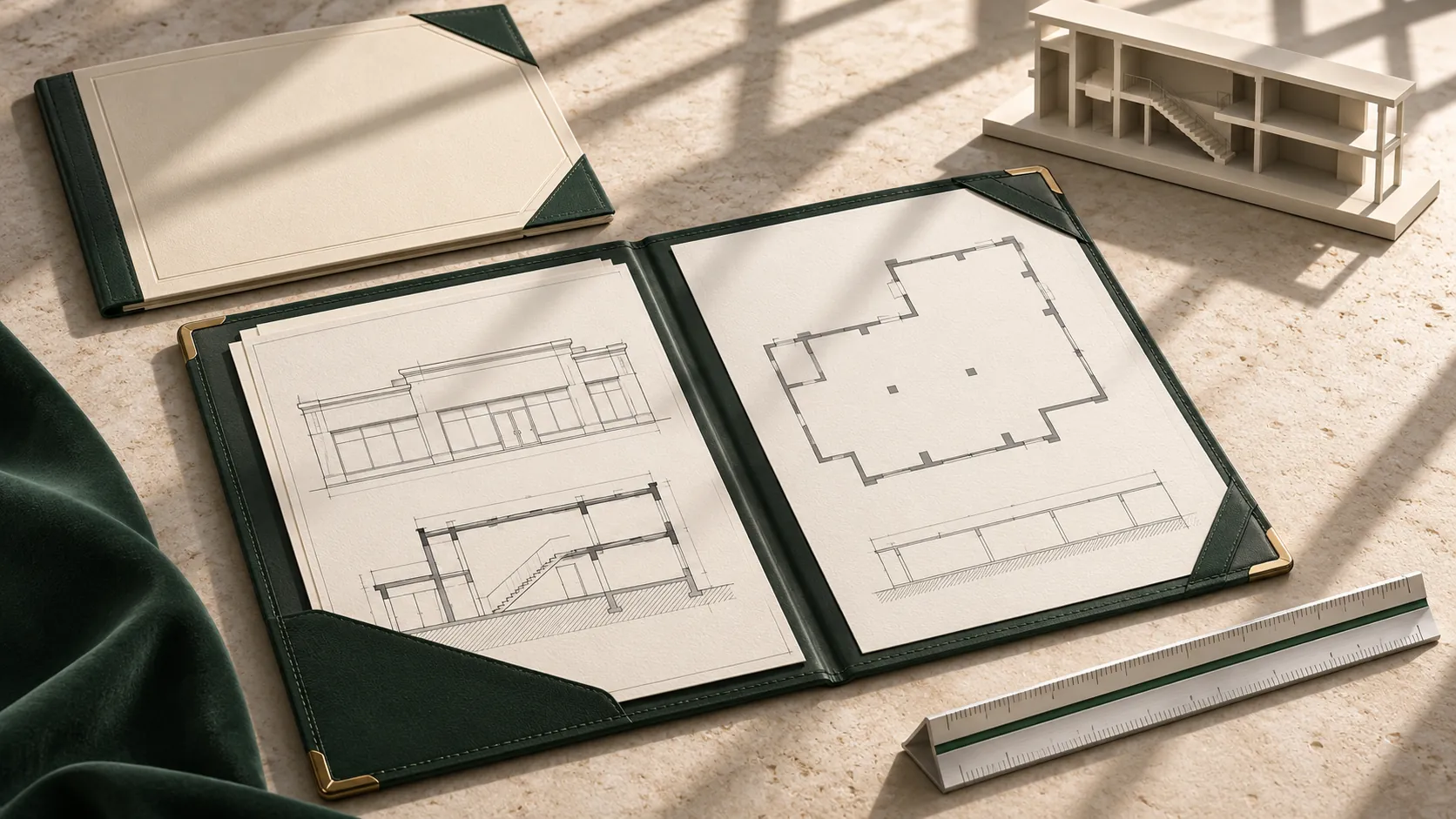
The cover is a conceptual illustration of work with technical property documents, not a genuine passport or a plan of F-375.
What a technical passport for non-residential premises shows
This is a technical inventory document used in Russia. MosgorBTI's description of its service for non-residential premises lists the address, layout, area, general building characteristics and the date to which the information relates. Check the actual form and attachments of the package rather than assuming its contents from someone else's specimen.
A description of an individual office and a passport for an entire building cover different subjects. Information may relate to the building structure, the premises or individual rooms. Establish which part of the property is being described first. A building-level characteristic is not automatically a verified specification for every office suite.
The document is useful as source information. Its existence does not mean that a specialist has already assessed structural capacity, ventilation, fire safety or suitability for your team. Each task requires appropriate material and professional assessment. A technical inventory is not an all-purpose certificate that an office is suitable for use.
Why an office buyer might request the passport
Identify the recipient and expected result before requesting the document. A buyer may need a property description to compare with the sales offer. A valuer needs characteristics as inputs to their work. A lender may request a particular package when considering finance. A designer determines which information can support proposed solutions and which needs further inspection.
Do not treat these requests as identical. Ask the recipient whether they need the full technical passport, specific inventory documents or another type of material. Clarify the property, the required reference date, attachments and acceptable format. This helps avoid obtaining an official document that nevertheless does not answer the intended question.
A newly prepared passport should not be presented as compulsory for absolutely every office sale. Separate the documents for the particular registration procedure, the lender's requirements and the buyer's due diligence. The opposite statement that a passport is never needed is also unreliable as a universal rule. The required material depends on the property, procedure and recipient's request.
Which property does the supplied package cover?
One address may refer to a building, a floor and several separately registered premises. Describing a property as an office does not establish exactly what is being sold. Check the document name, address, floor, property designations and sheet list. Where inventory or cadastral identifiers appear, compare them with the other purchase documents.
Ask the seller to explain the package's boundaries. A building passport may provide building information without answering every question about a particular suite. A document for one unit does not automatically explain the use of an adjoining area. A room number in a schedule is not evidence that the room is a separate property being sold.
For a multi-level space, establish which levels and sections are covered. Do not rely solely on an attractive diagram or matching address. Clarifying the property scope comes before checking individual dimensions and helps direct questions to the appropriate specialist.
How the passport differs from a technical plan and EGRN extract
Similar names refer to different documents. Compare their purposes rather than whether they contain drawings. A diagram inside a file does not by itself make it a cadastral technical plan.
| Document | Main purpose | What the buyer should clarify |
|---|---|---|
| Technical passport | Describe the property within the technical inventory system. | Which property is covered and when its condition was recorded. |
| Floor plan and room schedule | Show the configuration and associated characteristics of the rooms. | Which package the drawing and schedule belong to. |
| Cadastral technical plan | Prepare information for cadastral recording and the relevant EGRN procedures. | Which cadastral task the engineer prepared it for. |
| EGRN extract | Provide registry information within the scope of the chosen extract type. | Which characteristics, rights and restrictions it records. |
Matching a drawing to its room schedule is explained in the guide to floor plan and room schedule. Here, the task is to establish the role of the complete technical passport. Do not order it instead of a cadastral technical plan merely because both contain property characteristics.
For registry information, use the appropriate EGRN extract. However, a registry extract is not an inspection of the office interior today. A buyer needs mutually consistent sources, rather than one file expected to replace every check.
Issue date and recorded condition: why both matter
Separate two events: when the document was issued and when the condition it describes was recorded. If a copy of previously recorded information is issued today, that does not confirm another site visit. Ask about the information source and inspection date where relevant to the supplied package.
Do not replace the question of validity with a blanket rule that every passport lasts exactly five years. The document describes a condition as of a particular date. Changes to the premises may make some information outdated before any arbitrary calendar threshold. A recipient may also have its own requirements for confirming information for a particular task.
A document's age is a reason to ask questions, not independent proof of a violation. Ask what works or changes took place after the recorded condition. If the seller says that nothing changed, keep that explanation, but it does not replace comparing the documents with the actual property.
Archival copy or a new inspection?
First decide whether you need an existing document or confirmation of current characteristics. A copy helps recover previously recorded information and history. If the task is to describe the premises today, discuss the adequacy of the existing information and the need for an inspection with the provider.
Do not assume that a request to update the passport unambiguously identifies the service. In correspondence it might mean obtaining another copy, correcting an error or preparing information after alterations. State the expected result: for example, confirming the current characteristics of specific premises, not merely receiving a file with a recent issue date.
Ask what source material will be used, whether a site visit is included and which condition the result will describe. If an inspection is needed, agree the basis for the request and access arrangements in advance. Being able to obtain existing information without a visit does not give any prospective buyer authority to arrange an inspection of someone else's premises.
Archival material does not become useless when a new document appears. It may help explain the sequence of changes. Keep versions separate and do not combine sheets from different packages into one supposedly current document.
What to request from the seller before placing another order
Start with the available material. There is no need to assume that repeat work must be paid for immediately if the question can first be clarified using a complete package and explanations. The request should establish what already exists and what is actually missing.
- The complete technical passport file with all relevant sheets and attachments.
- The document's source, the property covered and the date of the recorded condition.
- An explanation of whether the latest issue involved an inspection or used existing information.
- Information about subsequent changes to the premises and the documents relating to them.
- An explanation of which parts of the offer are not covered by the supplied package.
- The electronic original and corresponding verification material where applicable, not just page images.
This is a practical buyer's request, not a compulsory form for every sale. If some material is missing, record the specific gap. An assurance that all documents are available does not establish which property and condition they describe.
How to request a technical passport in Moscow
MosgorBTI, Moscow's technical inventory bureau, has a specific service for preparing a technical passport for non-residential premises. Before applying, check its current conditions and establish whether the result meets your recipient's needs. Do not choose a service solely because its name includes passport or apply apartment instructions to an office without checking.
Clarify the available source information, whether an inspection is necessary, who may apply and the documents needed in your circumstances. A representative's authority matters, and an organisation may need to provide its details. An inspection also requires appropriate arrangements with the right holder, access and preparation for the specialist's work.
Confirm the cost and timescale for the agreed scope. Archival information, an inspection and additional work should not be treated as one identical service. A general promise of express delivery in someone else's article does not establish when a document for your property will be ready.
On receipt, check the result's name, property, file set and stated dates. Retain the electronic package as supplied. A readable printout is useful for discussion, but it should not automatically be treated as equivalent to the electronic original with its qualified electronic signature. Document and signature verification require appropriate tools; viewing an image is a different task.
Example: a recent copy describes an earlier office
Consider a hypothetical office purchase. The seller supplies a recently issued file. The package itself records the condition before changes to the internal configuration. During the viewing, the buyer sees a different arrangement of rooms. This is an illustrative example, not a description of F-375's documents or layout.
The first conclusion concerns only the information's limits: recent issue does not prove that the present configuration was inspected. The next step is to request explanations, not immediately declare the property unlawful. Establish what changed, which materials relate to those changes and which document is needed for the next check.
If a valuer requested a description of current conditions, the archival copy alone does not fulfil that task. If a lawyer is examining the property's history, the same file may be useful source material. One document can answer one question while being insufficient for another.
Handling discrepancies and alterations
Describe a discrepancy precisely: which sheet, characteristic or part of the property raises a question, and what are you comparing it with? Then establish whether the documents concern the same property and measure. A difference between marketed floor area and technical information does not explain its cause.
Separate questions about source data, physical condition and the documentation of changes. The answer may require a technical inventory specialist, cadastral engineer, designer or lawyer. A new technical passport should not be ordered as an all-purpose remedy for every document and registry entry.
Obtaining a technical description does not itself approve completed work. The procedure is explained in the guide to alterations to non-residential premises. Do not automatically apply the same procedure to an office in a block of flats and premises in a separate non-residential building.
The absence of familiar coloured annotations does not guarantee that nothing changed after the inspection. The wider transaction needs separate commercial property due diligence before purchase. Keep material questions open until the necessary explanations have been obtained.
Frequently asked questions about the technical passport
What is a technical passport for non-residential premises?
It is a technical inventory document describing property as of a particular date. It helps establish the property's characteristics, but does not replace registered-rights information, transaction due diligence or an assessment of the office's suitability for a particular use.
Is a new technical passport compulsory for every office sale?
It should not be presented as compulsory for every sale. Separate the documents for the particular registration procedure, the lender's requirements and the buyer's due diligence. Establish who requests the result and for what task. The opposite claim that a passport is never needed is also unreliable.
How long is a technical passport valid?
There is no general validity period. What matters is the condition and date it describes, any subsequent changes and the recipient's requirements. A reference to five years should not be understood as a universal date on which every passport automatically loses its effect.
Does a recently issued copy mean a new inspection?
No. A recent issue may reproduce previously recorded information. Clarify the date of the described condition, the data source and whether a new inspection took place. If current characteristics need confirmation, discuss the appropriate service with the provider rather than focusing only on the file's issue date.
Does a technical passport replace a cadastral technical plan?
No. The passport belongs to the technical inventory system. A cadastral engineer prepares the technical plan for the relevant cadastral task and information for EGRN. The fact that both documents contain drawings does not make them interchangeable.
Can the document be ordered before buying the office?
This depends on the service and the grounds for applying. Obtaining existing information and inspecting the premises have different conditions. Check applicant requirements, a representative's authority and access to the property. Being a prospective buyer does not itself authorise an inspection of someone else's office.
Does a new passport regularise layout alterations?
Obtaining a technical description is not itself approval of alterations. Establish the applicable procedure separately and check the documents relating to the work. A new drawing of the layout should not be treated as automatically resolving every legal and cadastral question.
Is a photograph or printout of the passport enough?
It can help discussion, but does not replace checking the complete package. Request the electronic original and its associated verification material where applicable. A readable image does not confirm the electronic signature, the currency of the information or the completeness of attachments.
What matters when buying your own office
A useful outcome can be stated simply: the task, property, source, reference date and document limits are clear. You know what has been confirmed, what needs clarification and who should answer the remaining questions. The number of files alone does not provide that clarity.
View the offer for sale and arrange a viewing through the F-375 office penthouse website. F-375 does not provide BTI document services. The availability of a particular property document package and its suitability for your transaction must be confirmed separately.